TPNW Background
Key Terms:
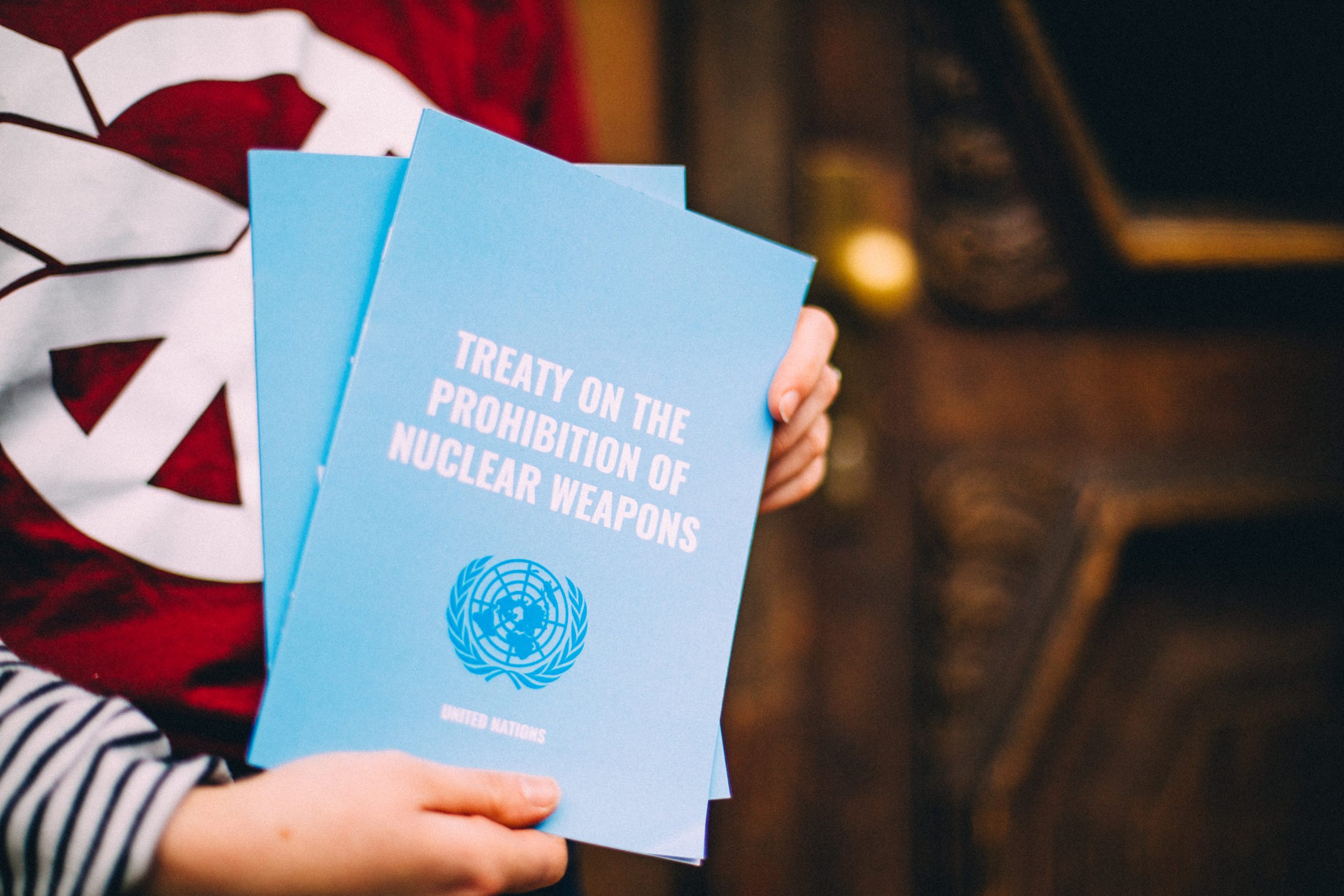
TPNW - The Treaty on the Prohibition of Nuclear Weapons (TPNW) is an international multilateral treaty that bans nuclear weapons. The TPNW first opened for signature in 2017 and entered into force, becoming enforceable under international law, on January 22, 2021. The TPNW has been signed and ratified by nearly 100 states. Beyond banning these weapons of mass destruction and calling for complete disarmament, this treaty supports victims of nuclear tests recognizing the health impacts of nuclear weapons.
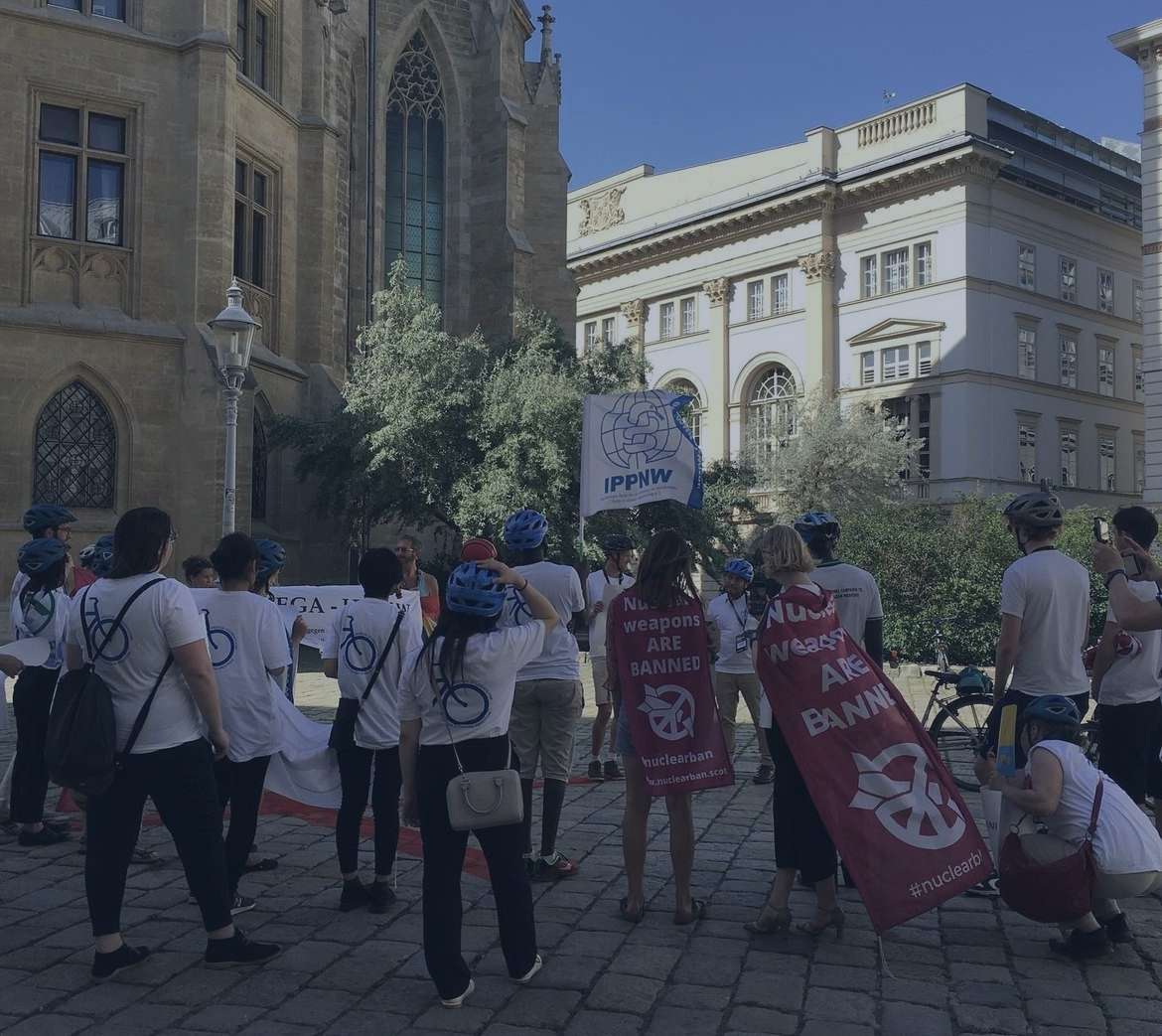
ICAN - The International Campaign to Abolish Nuclear Weapons (ICAN) the civil society organization which negotiated the TPNW. In 2017, ICAN was awarded the Nobel Peace Prize for their work on the TPNW and advocating against nuclear weapons. IPPNWC is a partner organization of ICAN meaning we are part of 650 organizations around the world in this campaign advocating for the end of nuclear weapons.
IPPNW - International Physicians for the Prevention of Nuclear War was founded in 1980 with the goal of bringing attention to the health risks of nuclear weapons. In 2017, IPPNW was a founding member of ICAN, and has since contributed to discussions surrounding the TPNW.
Nuclear Armed States - There are nine nuclear armed states, or states that possess nuclear weapons, currently in the world. The permanent five members of the Security Council at the United Nations; the United States, United Kingdom, France, Russia, China all have nuclear weapons.
Signatories and Ratifiers - Signing a treaty means that a state has agreed to the general principles of the treaty and believe its contents should be international law. Ratifying a treaty is a process which depends on the country where a state agrees to the contents of the treaty making it legally binding to them. Nearly 100 states have signed and ratified the TPNW.
Impacts of the TPNW
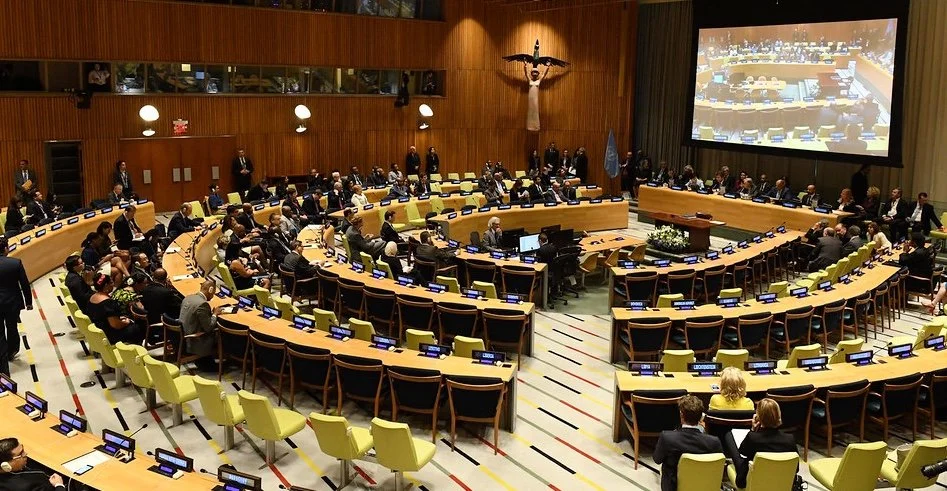
The TPNW prohibits all states parties to it from developing, testing, transferring, threatening, or using nuclear weapons. This is a landmark treaty and a major step forward in the international community towards the entire elimination of nuclear weapons.
The TPNW has been adopted by 120 and ratified by 68 states meaning that 68 countries from all over the world agree with this treaty and choose to be bound to it under international law. Nuclear armed states such as the United States, Russia, the United Kingdom, France, and China among others have not signed onto this treaty. Despite not having nuclear weapons, Canada has not signed the TPNW.
Global and Planetary Health
The use of nuclear weapons would have catastrophic consequences on human health. Even a limited nuclear war between two countries could cause widespread destruction, releasing massive amounts of radiation into the environment, leading to a wide range of acute and long-term health effects such as cancer, genetic damage, birth defects, and other diseases. In the case of a Nuclear detonation medicine offers no meaningful response, the only way forward is elimination. The TPNW and complete disarmament of nuclear weapons as the only way to prevent complete health catastrophe. The TPNW recognizes the extremely adverse health effects of nuclear weapons, both during testing and use. The research and advocacy of health professionals from IPPNW were an essential part of this evidence based policy.
Planetary health is an important concern of physicians working with IPPNWC. If a nuclear weapon were to be used on a city or in a war there would be serious negative impacts on global health not only from the initial blast but also from its devastating impact on our climate. The release of radioactive particles into the atmosphere could lead to widespread contamination of air, water, and soil, which would persist for decades or even centuries. The resulting ecosystem disruption and biodiversity loss would have profound implications for planetary health. Furthermore, the production, testing, and deployment of nuclear weapons involve significant environmental impacts, including the extraction and processing of uranium, the construction of nuclear facilities, and the transportation of nuclear materials. These activities can result in radioactive contamination of local communities, biodiversity loss, and soil and water pollution. Signing the TPNW is also crucial for the health of our planet, as the production, testing, transport and potential use of nuclear weapons does and could have devastating environmental consequences.
Scientists and Doctors from IPPNW have modelled the effects of a nuclear war on our climate and have found that a nuclear winter could follow leading to mass famine across the globe. You can read information here or the original article in Nature Food here.
Canada and the TPNW
Canada must join the TPNW and call for the end of nuclear weapons. The TPNW emphasizes the humanitarian impact of nuclear weapons, and it recognizes that the only way to prevent the use of nuclear weapons is their total elimination. By signing the TPNW, Canada would be committing itself to work towards nuclear disarmament and promoting international cooperation to achieve a world free of nuclear weapons. This would not only contribute to global health and safety but also to the security of future generations. Moreover, signing the TPNW would demonstrate Canada's commitment to the non-proliferation of nuclear weapons and to the international rules-based system. It would reinforce Canada's position as a leading advocate for disarmament, non-proliferation, and peacekeeping.
The TPNW offers the best solution to ensure nuclear weapons are never used, which is of the utmost health priority. As Canadian physicians, IPPNWC recognizes how the TPNW is essential to the prevention of nuclear war and urges the Canadian government to sign onto it to protect Canada and the world’s health.
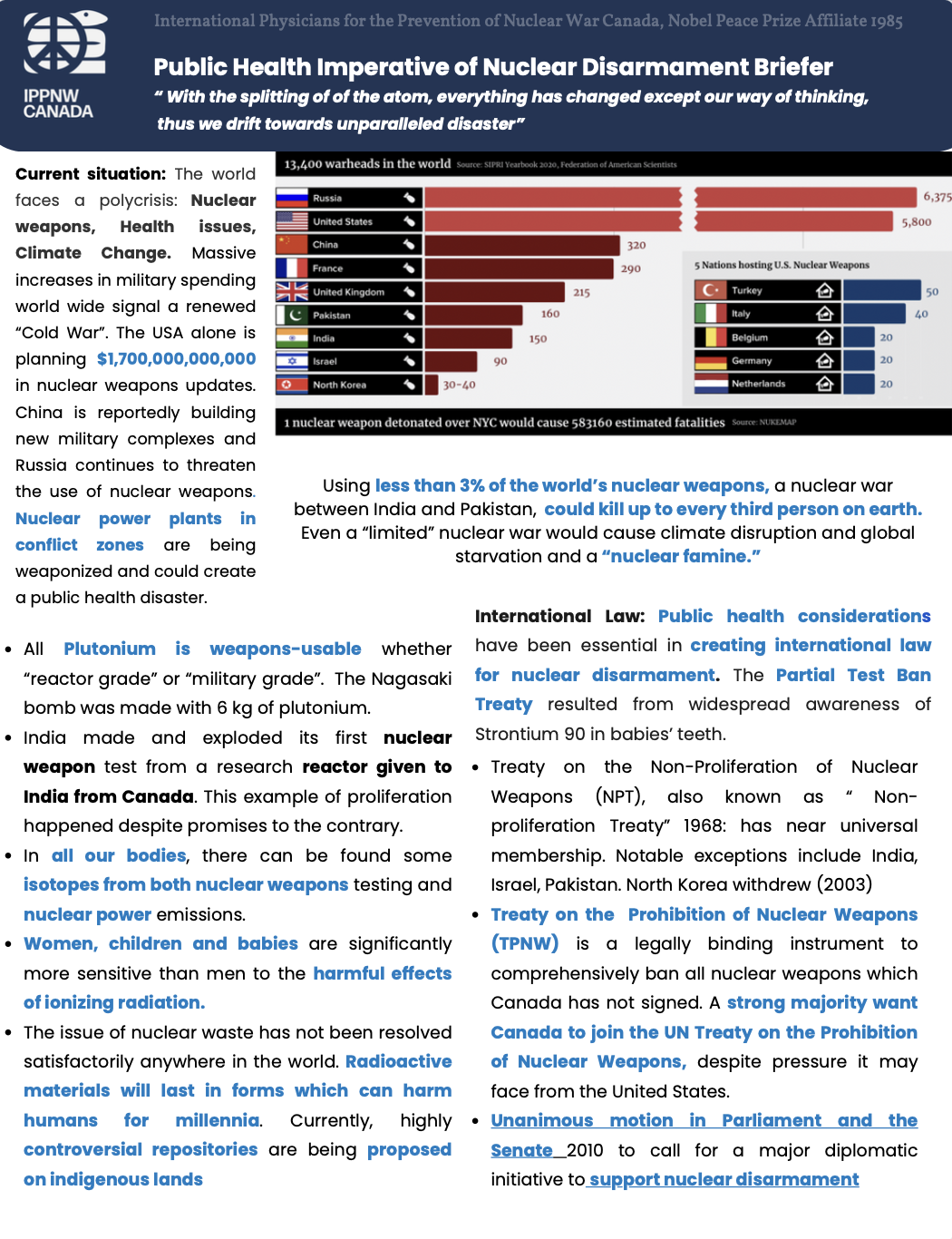
Background Briefs.
Check out two background briefers below, exploring nuclear weapons and Canada and their public health impacts. These were drafted with support from the International Campaign to Abolish Nuclear Weapons (ICAN).


“I can abolish nuclear weapons”
The International Campaign to Abolish Nuclear Weapons (ICAN) was developed as a grassroots, civil society, people-empowered movement. It was meant to be a playful campaign encouraging people from all walks of life and all countries to have fun while they worked on the intricacies of making nuclear weapons illegal.
Running through my head, I can hear the chant of high school students as they stood up and recited : “I can abolish nuclear weapons” then louder.
“ICAN Abolish Nuclear Weapons”. I can remember the Can-Can dance and the people in kangaroo suits hopping around delivering literature about ICAN. Kangaroo suits were indeed appropriate as it was members of the Australian affiliate of IPPNW who developed the concept of ICAN.
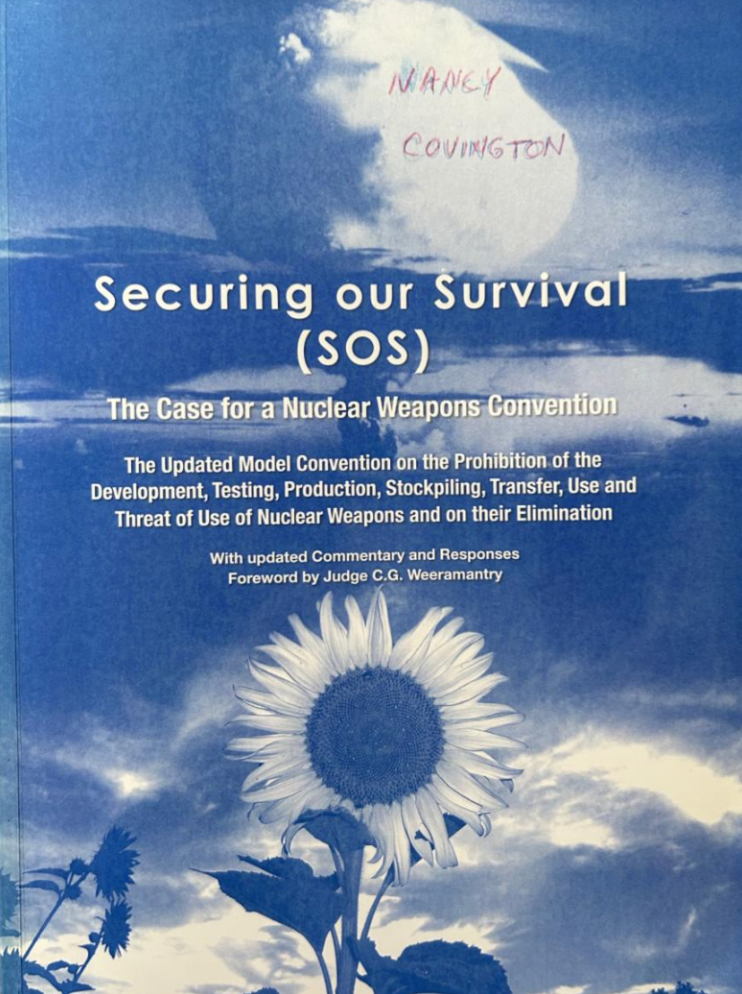
The kangaroo-delivered literature detailed the immense amount of background work which had already been done and was already paving the pathway to the United Nations. Lawyers, Engineers, Scientists and Physicians had developed a document Securing our Survival (SOS) The Case for a Nuclear Weapons Convention.
That was 2007. In a brief 10 years later, The Treaty on the Prohibition of Nuclear Weapons was produced by the General Assembly of the United Nations, finally making nuclear weapons illegal. Central to attaining this treaty was the fact that civil society, under the guidance of ICAN, worked diligently to change the rhetoric, or the way we talk about nuclear weapons, from a military stance of “nuclear deterrence” to a tone of the “humanitarian” effects of nuclear weapons.
For ICAN’s efforts in bringing about this treaty, ICAN was awarded the Nobel Peace Prize. The process was fascinating, and the work continues.
The acronym ICAN, for International Campaign to Abolish Nuclear Weapons was always meant to be a play on words. How many ways can you use “ICAN”? How many ways can you have fun while working on the very serious issues of surviving in a world with so many nuclear weapons?