
Radiation Health Effects
Photo by Lukáš Lehotský on Unsplash
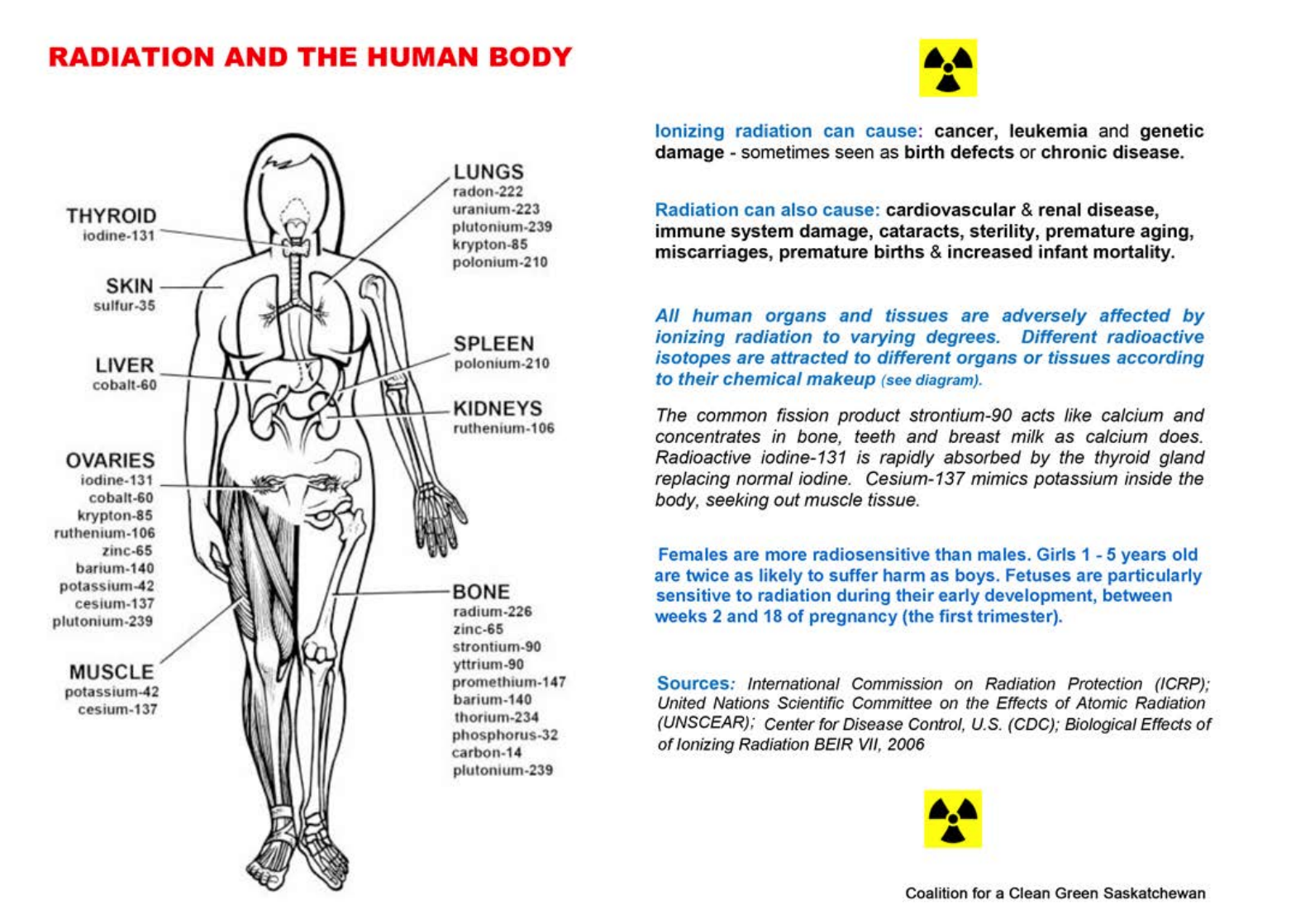
Ionizing radiation is the type of radiation that can detach electrons from or ionize other atoms. Humans are exposed to ionizing radiation through x-ray screening for security, medical devices and other consumer and industrial uses, nuclear power sources and waste, some soils and rocks, cosmic rays from space and nuclear detonations. This diagram shows where different radioactive isotopes will be taken up by the body. For instance, strontium - 90 acts like calcium and will travel to teeth and bones. Radioactive iodine - 131 will go to the thyroid.
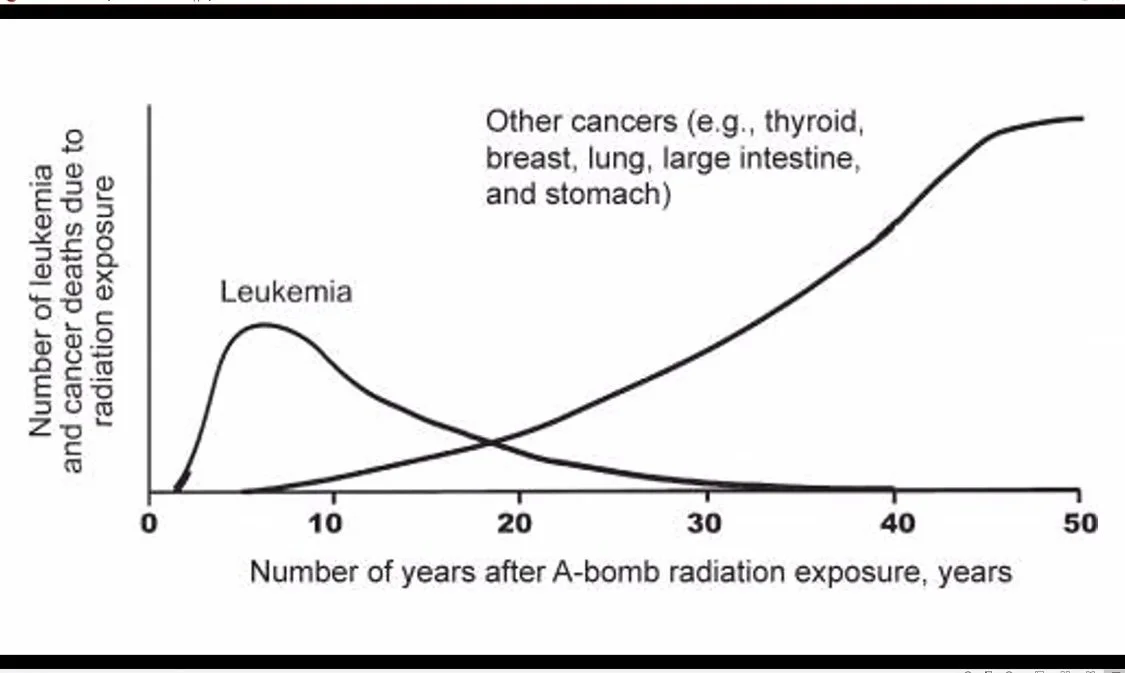
In sufficient doses, radiation will kill. Smaller doses will cause leukemias and solid tumours, that is, cancer of organs and bones, that are delayed between 5 to 30 years. Radiation can make genetic mutations which are most terrifying when passed to the next generations.